
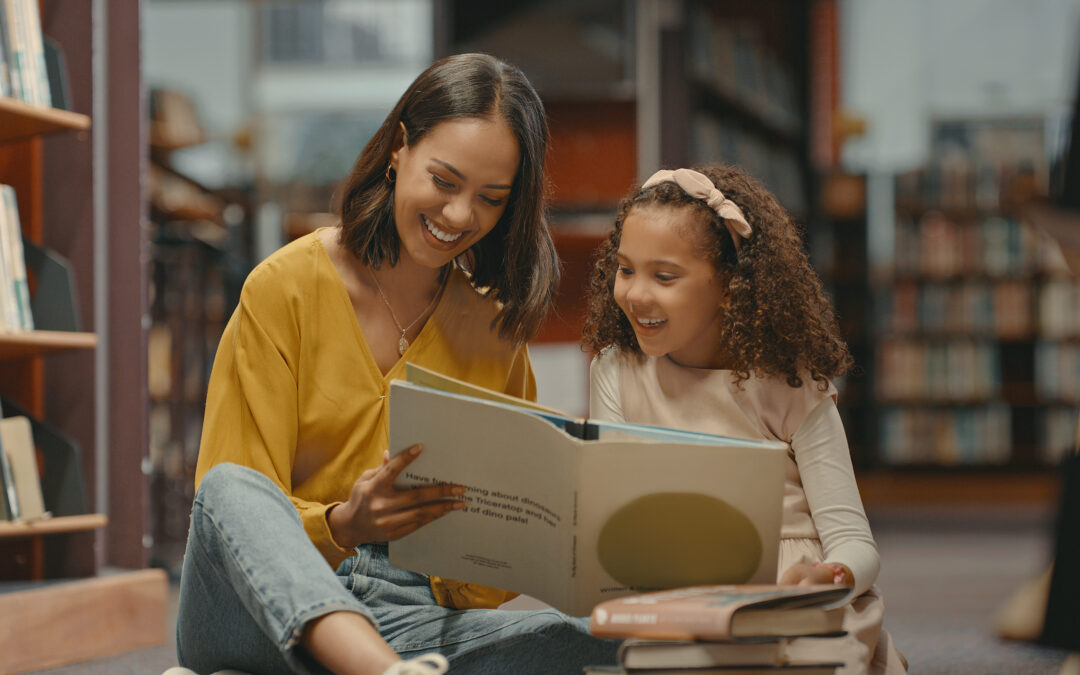
In communities across America, parents are shocked to see the sexually explicit content in the books and curricula being introduced into their children’s classrooms. Yet time and again, when those parents ask local school boards to adopt age-appropriate standards— regarding sexually explicit material—they are smeared with the label of “book banners.” That smear must be rejected. Parents have both the right and the responsibility to demand that schools protect children’s innocence and focus on sound academics, and school boards have the legal right and responsibility to deliver such standards.
For parents who want to go deeper, our White Paper on Standards for Sexually Explicit Content in Schools offers detailed guidance on how districts can establish clear, lawful, and age-appropriate policies that protect children and support educators.
Read it here ➤ https://pafamily.org/standards-for-explicit-sexual-content-in-schools/.
The false narrative: “book banning” as a weapon
Judge Cheryl Lynn Allen lays out the problem plainly in her June 2025 op-ed “Media Smears and the Real Fight for Our Kids’ Minds.” She writes:
“When communities push back against such content, they’re falsely accused of ‘banning books.’ … Refusing to stock a book in a school library — especially one that includes sexually explicit scenes — is not the same as banning it.”
Allen reminds readers that school boards have the legal authority and moral duty to set appropriate boundaries, not to allow any content, so long as it isn’t technically illegal. The smear campaign—portraying reasonable filtering and parental concern as extremism—is a deliberate strategy to intimidate parents and board members, and to silence debate.
That rhetorical gaslighting must not succeed.
Why this fight matters: protecting children, safeguarding education
1. Preserving childhood innocence
No one expects a public school to assign material showing people engaged in sex acts or explicit written descriptions of people engaging in sex acts. Allowing books full of explicit sexual content into K-12 libraries or curriculum effectively forces children into exposure for which they are not developmentally ready to handle or process.
2. Maintaining focus on academics
When explicit content fills library shelves or instructional time, it pushes out higher-value alternatives: classic literature, history, civics, and science. Every provocative selection displaces something else that could uplift rather than exploit. Those introducing and allowing this content are causing the controversy, not the responsible parents and board members, who are rightly speaking up.
3. Avoiding liability and conflict
As Judge Allen notes, the absence of clear policies invites legal threats. Librarians or principals forced to decide book removals on the fly risk being accused of viewpoint discrimination. Written standards — differentiated by elementary, middle, and high school — protect educators, educational institutions, and give parents a voice.
4. Resisting ideological indoctrination in the classroom
A national Ipsos poll found that 76 percent of Americans—and 77 percent of parents—agree: “classrooms should be places for learning, not political battlegrounds.” In short: parents want what schools should always provide—solid, age-appropriate instruction—not coercion of children into ideological agendas.
From principles to the ballot box: why school board elections matter
The people who control your district’s library and curriculum policies are your local school board members. It is important to remind them to steward that responsibility well. Avoiding any written age-appropriate standards in policy isn’t neutral; it instead leaves the low bar of criminal law as the only real standard. In other words, the only standard becomes “as long as it does not violate criminal law to give particular sexually-explicit material to a child, then it belongs in the minor’s school library.” That is a very bad standard. Just because some parents may desire their own kids to view sexually explicit books, that does not mean they get to impose the lowest-common-denominator standards on their public school library or the rest of the children in the school.
- When parents show up and respectfully speak, boards often listen. But if pro-family voters stay home, boards tilt toward radical agendas and ideologies.
- Candidates must be vetted: Will they defend the right of parents to weigh in on age standards? Will they refuse to be intimidated and bullied by “book banning” smears?
- Casting your vote for a candidate who respects families is not small. It sets the tone for whether your schools will cede moral authority to ideologues or return it to the community and a focus on academic learning.
As Allen warned, “This rhetorical gaslighting is meant to … shift the Overton Window of what we consider acceptable in children’s education. It’s working—unless we push back.”
As Allen pointed out, the facts are that parents and school boards are not erasing ideas or censoring history. “They are drawing lines where lines need to be drawn, with public input. In an age where radical ideologues want to blur every boundary related to sex, we need more, not fewer, people willing to stand up and say, “leave the children alone.”
What the data says
Parents Defending Education (PDE) released polling on key issues facing schools in January of 2025, surveying 1,000 parents with children 18 or younger between Dec. 12–18, 2024.
One finding stood out:
90% of parents agree that focusing on core subject areas—math, reading, writing, science, and social studies—would improve the quality of public education.
That consensus spans the political spectrum:
- 92% of Republican parents, 88% of independents, and 91% of Democrats agree.
- 87% of white parents, 91% of black parents, 100% of Asian parents, and 95% of Hispanic parents agree.
Nicole Neily, President of Parents Defending Education, summarized the message:
“These results highlight that parents are dissatisfied with many elements of the modern American education system—and that there is broad-based consensus that it’s time for schools to get back to basics.”
The takeaway is clear: parents across every background want less politics and more teaching. They’re united in calling for schools to return to the fundamentals of education—academics, not radical ideology and coerced activism.
Calling all pro-family voters: a three-step action plan
- Research your local school board candidates.
- Look for evidence that they support parent input and age-appropriate standards.
- Avoid candidates who reflexively adopt “book banning” smears or refuse to draw real lines.
- Use candidate forums, questionnaires, or direct questions at meetings.
- Show up & vote.
- Local races often decide big issues. A few votes can tip a board majority.
- Municipal elections, school board, or off-cycle elections are low turnout — your vote carries disproportionate weight. And this year it matters more than ever.
- Stay involved before & after election day.
- Attend board meetings. Watch the policies they adopt (library, curriculum, opt-out). Ask your kids about what they’re learning in class.
- Respectfully speak up when they propose content or curricula that violate children’s age-appropriateness. Write letters to your editor.
- Encourage written, transparent policies that require parental review and input.
Raising objections to explicit books in school should not be controversial. It is exercising the parental right to protect your child, preserve educational integrity, and push schools back to their core mission: teaching reading, writing, history, science—not shock content. Those who want sexually explicit books in schools are distracting from the mission of schools and are more concerned with waging their woke-culture war than with the mission of educating kids.
As Judge Allen puts it: “Age-appropriate standards are not censorship. They are common sense, good education policy, and good parenting.”
We must reject the false narrative. We must demand accountability of our school districts. And we must back that demand with votes—for candidates who will stand firm for children, not agendas.
Don’t sit on the sidelines. Find your local school board election. Research the candidates now. Pledge to vote. And make sure your voice is heard—because your children’s future depends on it.
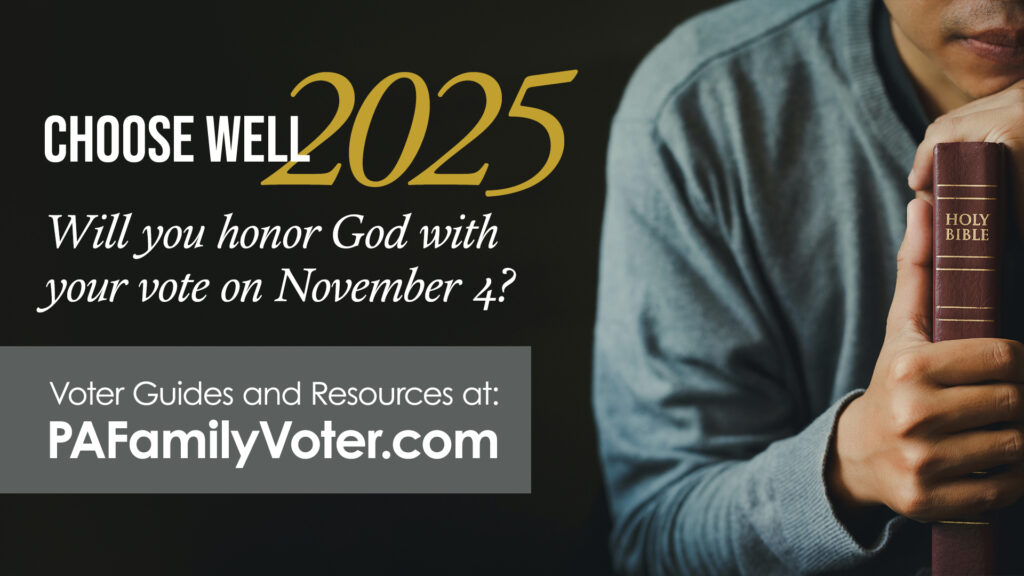
To help you prepare for Election Day and learn where candidates stand on issues impacting your family, visit https://pafamily.org/choosewell.
You’ll find practical tools, voter guides, and church resources to help you pray, discern, and Choose Well this November.
Related Blogs: Retention Election post, & A Biblical Response to Gender Ideology, & No More Fear: IRS Confirms Churches Can Speak on Elections

You should encourage your members to run for school board. Obviously too late now for 2025 but plenty of time to prepare for 2027. In the meantime, however, there are board vacancies from time to time and your PA Family members should apply.
The only way you are going to change a school board is to get ON that school board!
Respectfully, I would like to make a few short counterpoints to your argument. To start, book banning severely limits students’ exposure to diverse perspectives, which is essential for developing critical thinking and empathy. Literature often explores complex themes, including identity, relationships, and societal issues, allowing students to better understand themselves and others. When we censor books, we restrict meaningful conversations about the real-world experiences that many individuals face.
Censorship not only undermines academic freedom but also sends a harmful message that certain viewpoints or experiences are unworthy of discussion. Instead of shielding students from challenging topics, we should be empowering them to engage with these issues thoughtfully. By confronting difficult subjects in a guided way, they can develop the analytical skills necessary for navigating the complexities of life.
Teachers, as trained professionals who understand developmental stages, play a critical role in selecting age-appropriate literature. They can facilitate discussions around sensitive topics, helping students process and reflect on what they read. This approach enriches the educational experience rather than stifling it.
Ultimately, we should urge everyone to resist the temptation to ban books and instead approach literature with an open mind. Encouraging access to a wide range of perspectives empowers students to engage in meaningful discussions and develop critical thinking skills. Rather than censoring materials that may challenge us, we should embrace the opportunity to learn and grow from diverse narratives. Opening our minds to different viewpoints fosters a more inclusive community where everyone feels seen and understood. Let’s advocate for a world where students can explore the richness of literature without fear of censorship, preparing them to navigate the complexities of our diverse society.
Lily, Let’s be clear: this debate isn’t about “diverse perspectives”, and you trying to make it so is an attempt at emotional manipulation. This is about whether sexually explicit content belongs in K–12 schools.
Standards must be grounded in objective reality: biological truth, developmental science, and what is demonstrably healthy for children. Policies are not made based on abstract appeals to emotions (empathy) untethered from truth. Teaching “understanding” while ignoring biological reality and age-appropriateness is not enlightened; it’s irresponsible.
Calling this “censorship” is political propaganda attempting to silent dissenting parental voices through manipulative public shaming. No thanks.
Schools set content standards in every other area because children are not adults, and parents, not government employees, still hold the primary authority to decide what is best for their kids. Teachers serve families; they do not replace them. ~ Josue
Josue,
First, a small clarification: my name is Lilly. I mention this only to ensure we are engaging one another respectfully and accurately. I also want to clarify that my original comment was not an attempt at emotional manipulation, but a good-faith contribution to a discussion that directly affects students like me. As a high school student, I experience firsthand how literature shapes classroom dialogue, critical thinking, and our ability to understand perspectives beyond our own.
To be clear, I agree that explicitly pornographic or purely erotic materials have no place in K–12 classrooms. Schools should absolutely maintain age-appropriate standards. However, there is an important distinction between material that is gratuitously explicit and literature that addresses mature themes in an educational context. Removing books simply because they explore topics some adults find uncomfortable—or do not fully understand—risks depriving students of opportunities to engage with real-world issues in a structured, guided environment.
You frame this issue as solely about sexually explicit content, but major educational and medical organizations emphasize that context and developmental appropriateness—not blanket removal—are the key standards. The American Academy of Pediatrics notes that adolescents benefit from guided discussions about complex topics because such conversations support healthy cognitive and social development. Similarly, the American Library Association has consistently found that restricting access to books limits students’ readiness for college-level analysis, where engagement with challenging themes is expected. Age-appropriate selection and professional guidance already exist; removing materials outright does not strengthen standards—it narrows learning.
It is also inaccurate to suggest that concerns about censorship are merely political rhetoric. The National Coalition Against Censorship defines censorship in schools as the suppression of ideas based on content or viewpoint, particularly when driven by ideological pressure rather than educational merit. When books are removed not for lack of educational value but because they address uncomfortable realities, students lose opportunities to develop empathy, media literacy, and the analytical skills required in a diverse society.
Finally, parents absolutely play a vital role in their children’s education, but public schools serve entire communities with varied backgrounds and beliefs. Teachers are trained to balance developmental readiness with educational value—not to replace families, but to prepare students for participation in a complex world. Shielding students from every difficult subject does not preserve innocence; it delays essential learning. A collaborative approach—parental input, professional expertise, and student needs—better reflects the shared goal we all claim to support: preparing young people to think critically, engage respectfully, and contribute responsibly.
Respectfully,
Lilly
Clearly this group is driven by some religious organization who wants to shove their beliefs on the rest of us. The claims you make are nonsense.
Fooey.
James, Dismissing concerned parents as a “religious group” is an easy way to avoid the actual argument: whether sexually explicit material belongs in K–12 schools.
Be careful; your religious bigotry is showing.
You may disagree with the conclusions, but calling it “nonsense” doesn’t refute the legal authority of school boards or the broad, bipartisan consensus among parents that age-appropriate standards matter. That has nothing to do with religion.
~ Josue
Dear Mr. Josue, I am doing an argumentative essay in my ELA class, on whether the censorship of books should be allowed in school. My argument is yes it should be allowed, and I was wondering if you had any other sources that I might be able to use for my essay.
did u ever get ur sources Jesse senpai
Hi Emma, I just sent Jesse some links for his review. ~ Josue
Hi Jesse, Thank you for reaching out. Here are a few additional links in our website with information and resources for your essay.
https://pafamily.org/standards-for-explicit-sexual-content-in-schools/
https://pafamily.org/2025/10/09/parents-must-demand-age-appropriate-standards-in-schools
https://pafamily.org/2025/07/03/affirming-parental-authority/
https://broadandliberty.com/2025/06/23/cheryl-lynn-allen-media-smears-and-the-real-fight-for-our-kids-minds/
https://pafamily.org/curriculumtransparency
https://www.post-gazette.com/opinion/guest-columns/2025/07/03/mahmoud-taylor-supreme-court-religious-freedom-first-amendment-lauren-hackett/stories/202507020046?sm_guid=OTMwMDQzfDg0MTIxNjE4fC0xfEJzdGFkbGVyQHltYWlsLmNvbXw4NDY1OTk0fHwwfDB8Mjk4MDI2NDk0fDExNzl8MHwwfHw5Mjc1MDl8MA2
And lastly, here is polling on this issue.
Rasmussen Reports (September 2025) – “Voters Oppose Explicit Books in Public Schools”
https://www.rasmussenreports.com/public_content/politics/partner_surveys/voters_oppose_explicit_books_in_public_schools
This national poll of likely voters found strong majorities (including 86% of parents) believe parents should have control over books in public school libraries. It also showed overwhelming opposition to books with explicit sexual depictions in school libraries (62% for high schools, rising to 74% for middle schools and 81% for elementary schools), along with broad concern about age-inappropriate sexual content and support for schools informing parents about materials.
Rasmussen Reports (October 2022) – “Voters Against Obscene Books in Public Schools”
https://www.rasmussenreports.com/public_content/politics/partner_surveys/voters_against_obscene_books_in_public_schools
This earlier national poll showed similar strong support: 69% of voters opposed books with explicit sexual depictions of sex acts in public high school libraries, 77% were concerned about school-age children being exposed to non-age-appropriate sexual material, and majorities across parties supported parental notification and rights regarding school content.
Goldwater Institute / Rasmussen poll (February 2022) – Parental rights to curriculum transparency
https://www.goldwaterinstitute.org/poll-84-of-americans-support-parents-right-to-see-what-kids-are-learning/
This national poll found 84% of American voters support parents’ right to see curriculum plans and materials used in their children’s classes. It underscores broad public backing for parental involvement and oversight in school decisions, including book and instructional content choices.
Note — I would encourage you to look closely at the language and propaganda being used on this issue. Most parents want discernment and choices made about what their kids are exposed to, and opponents are using smear and gaslighting by calling it “book banning”. Much of the fight on this issue is about the definition of words, as the pro-sexualization side seeks to use emotional manipulation tactics.
Hope this all helps.
~ Josue
Dear Mr. Sierra
Thank you so much for these sources. Even though my essay was due March 10th, I am still appreciative of these sources.
God bless,
Jesse