

HB 300 is not a modest update to civil rights law. It is not a neutral “anti-discrimination” measure. And it is not simply about treating people with kindness.
It is a sweeping ideological rewrite of Pennsylvania law. HB 300 will result in redefining human identity, coerce speech, punishing dissent, and placing families, faith-based institutions, and children squarely in the crosshairs of the law.
Pennsylvanians deserve to know that truth, clearly, directly, and without euphemism.
This Bill Replaces Reality With Ideology
At the heart of HB 300 is a radical claim: biological sex is legally irrelevant.
The bill defines “gender identity or expression” as a person’s internal sense of self, outward expression, and mannerisms, regardless of objective biological sex. That single phrase is doing enormous work.
Once the law treats sex as meaningless, the state is no longer protecting people from unjust treatment. It is enforcing an ideology of self-definition, and would elevate subjective identity above objective reality.
This is not a minor policy shift. It is an anthropological revolution imposed through statute. And when the law denies reality, real people get hurt. Similar laws have been enacted in other states, so this isn’t hypothetical.
From Civil Rights Law to Speech Control
HB 300 turns ordinary disagreements about sex, language, and meaning into potential civil rights violations. Under similar laws across the country, refusing to use chosen names or pronouns, even respectfully, has been treated as discrimination.
This is not speculation. It is a documented pattern. What follows is predictable:
- Investigations by human relations commissions
- Mandatory trainings and coerced settlements
- Crushing legal costs—even for those who eventually prevail
The message becomes unmistakable: say what the state says is true, or pay the price. That is not tolerance. That is compelled speech. And once the government claims authority to decide what must be said about the human body, freedom of conscience becomes conditional.
Religious Freedom Reduced to a Legal Obstacle Course
Supporters of HB 300 point to its so-called “Protection of Religious Exercise” language. But that protection is largely illusory.
Under the bill, religious organizations are still pulled into the Pennsylvania Human Relations Act’s enforcement machinery. Faith-based employers, charities, and ministries must prove that the law places a “substantial burden” on their beliefs, then survive years of costly litigation to defend themselves or their ministries.
That burden is not theoretical. For small ministries, family businesses, and churches, the process itself is the punishment. A victory after years of litigation is no victory at all.
The chilling effect comes first. Compliance follows. Convictions are quietly surrendered, not because they were wrong, but because they became too costly to hold.
We’ve Seen the Evidence: These Laws Already Have Victims
We are repeatedly told that laws like HB 300 are harmless; that they simply ensure people are treated kindly. But in Colorado, a small Christian bookstore called Born Again Used Books saw firsthand how quickly “kindness” becomes compulsion. After serving its community for more than two decades, the state amended its anti-discrimination law to redefine “gender expression” to include chosen names and pronouns, requiring businesses to use language based on gender identity rather than biological sex.
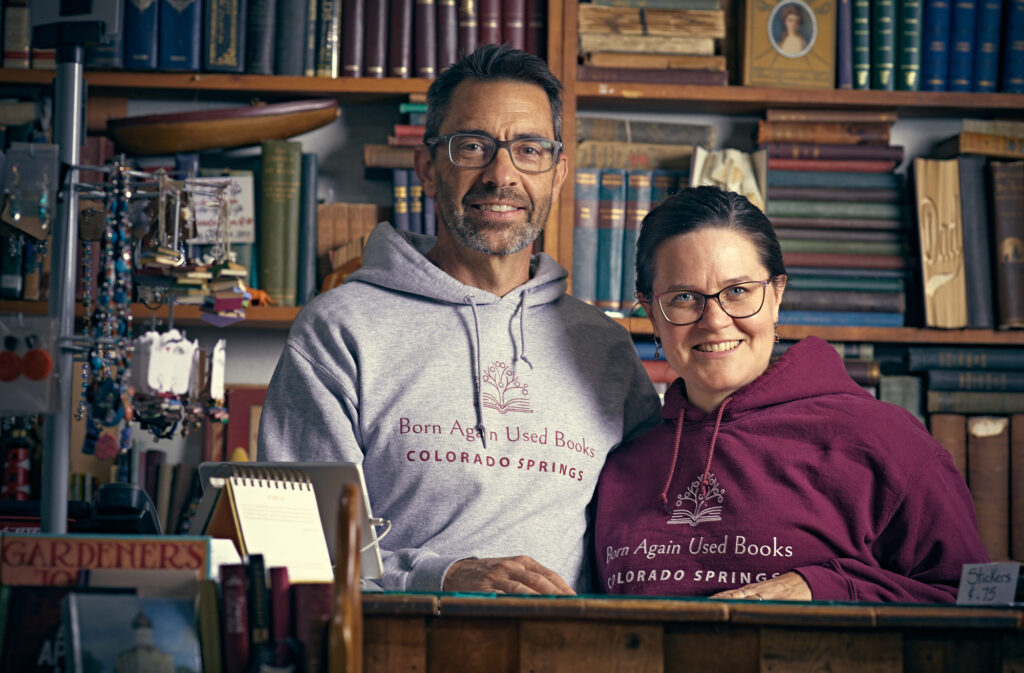
The bookstore’s owners, Eric and Sara Smith, have not been accused of mistreating anyone. In fact, they serve all customers respectfully. But because they believe sex is a biological reality that cannot be changed, Colorado law now places them in an impossible position: either adopt speech that violates their faith or risk investigations, fines, and penalties. Rather than wait to be prosecuted, they filed a federal lawsuit to protect their right to speak truthfully and operate their business without government-compelled speech.
Around the same time, Jennifer Sey, a former national gymnastics champion and corporate executive, faced similar pressure after launching XX-XY Athletics, a company created to speak plainly about biological sex and protect women’s sports. Under Colorado’s law, even stating obvious biological facts became grounds for investigation. In both cases, the message was unmistakable: participate in public life only if you affirm the state’s ideology.
The coercion does not stop at businesses. It reaches into classrooms and careers. In California, kindergarten teacher Mirella Ramirez lost her job because she declined to use pronouns she believed were untrue—despite asking for accommodations that would allow her to teach every child with equal care and respect.
The school district refused. She was disciplined, then terminated. Her case exposes the lie that these policies merely ask for “sensitivity.” They demand speech. And refusal carries consequences.
The same pattern appears in the creative professions. Wedding photographers like Emilee Carpenter in New York and Chelsey Nelson in Kentucky were told that declining to create expressive content celebrating messages they do not believe could cost them their livelihoods. Courts ultimately recognized that the government cannot compel artistic expression, but only after years of legal battles that few ordinary citizens can afford.
Again, the punishment came long before any ruling.
Perhaps most devastating are the consequences for children. In Oregon and Washington, families willing to open their homes to vulnerable kids were turned away, not because they were unsafe or unloving, but because they would not affirm specific beliefs about gender identity and pronouns.
Jessica Bates was denied the opportunity to adopt siblings unless she agreed to “respect, accept, and support” an ideology that violated her faith. Shane and Jennifer DeGross lost their foster care license for the same reason. These are not extremists. They are families eager to serve. Yet the state chose ideology over stability, conformity over compassion.
The result is fewer foster homes, fewer loving placements, and children left waiting—collateral damage in a cultural experiment they never chose.
The Harms Will Not Be Abstract
If HB 300 passes, Pennsylvanians should expect:
- Speech policing migrating into everyday interactions
- Faith-based organizations withdrawing from public service
- Foster care systems losing willing families
- Employees self-censoring to keep their jobs
- Civil society narrowing to those who conform
These harms will not make headlines. They will accumulate quietly. That is how bad law works.
The Choice Before Pennsylvania
We can and must reject harassment, cruelty, and unjust treatment. But we do not need HB 300 to do that.
What this bill actually does is replace pluralism with coercion, truth with ideology, and compassion with compliance. Pennsylvania should not force its citizens to lie in order to live, work, serve, or care for children.
HB 300 is not a step forward. It is a warning sign.And Pennsylvanians should take it seriously, before the cost becomes unavoidable.

House Bill 300 should not be passed at any time as it will harm our freedom in the future
Legislation of this type must be opposed at every step if we are to remain a truly free nation.
Legislation of this kind destroys constitutional freedoms
This is all pretend. Even if you believe that it’s possible to be in the wrong body, forcing people to conform to legislated behavior is also pretend. Making actual discrimination illegal is not the same as using the rule of law to make people pretend to agree with someone. Law exists to protect people from real threats and to provide real opportunity to them. It’s up to the supporters of HB 300 to show how this bill would do that.
People need to rise up against these harmful ideologies.
HB300 is not good for PA people.
this bill is only to take away a common persons right to choose. it is not good for people in pa.
This bill must not pass! It’s a very deceptive piece of legislation. This will take away our basic rights to freedom of speech & freedom of religion. It states that it’s intended to ensure everyone is treated fairly when in reality it doesn’t protect women or families. It actually discriminates against anyone who believes in traditional family values!
Please, please do not let this bill pass. It will be very detrimental to our Commonwealth that use some common sense we have gotten along for years without such a Bill and we do not need it now.J
This HB 300 is a cleverly disguised mandate for citizens of Pennsylvania to give up their constitutional right to free speech and freedom of religion. It’s obvious that children in need of care, protection, and guidance would be adversely affected. It’s incredible that the leadership of the PA House would even bring this bill to a vote. This demonstrates an extreme lack of common sense.